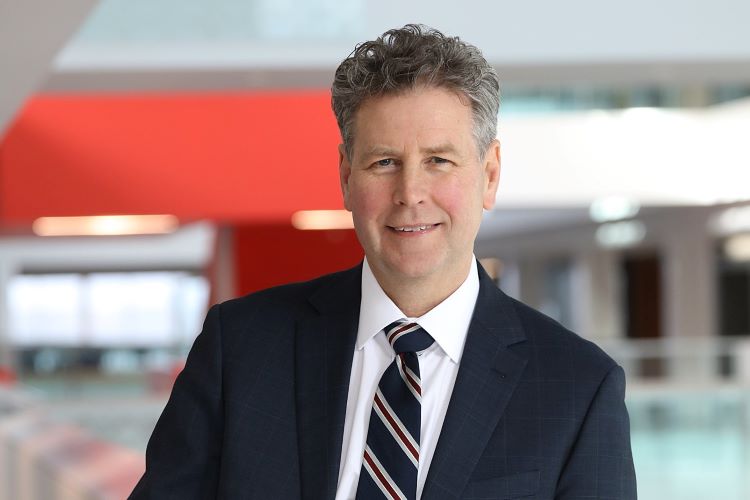
DR. PASCALE CHAMPAGNE
Associate Professor, Department of Civil Engineering

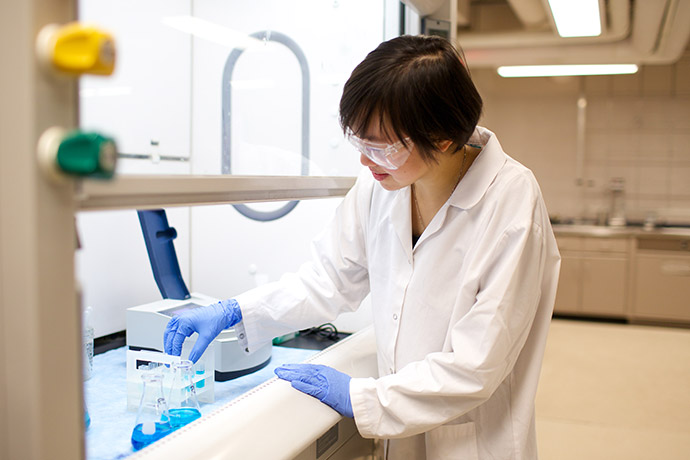
Dr. Pascale Champagne - a leading researcher in environmental engineering - is developing a process to extract useable organic materials from waste biomass, such as livestock manure and forestry residue, and convert them into valuable chemicals and sources of energy, like biofuel.
Aiming to develop alternate technologies and sustainable environmental practices, Professor Champagne is also working to engineer better processes for waste management to minimize the impact of municipal, agricultural and industrial activities.
It's cutting-edge research that provides sustainable and economically viable solutions to reduce air, soil and water contamination.
Learn more about Pascale Champagne's research...
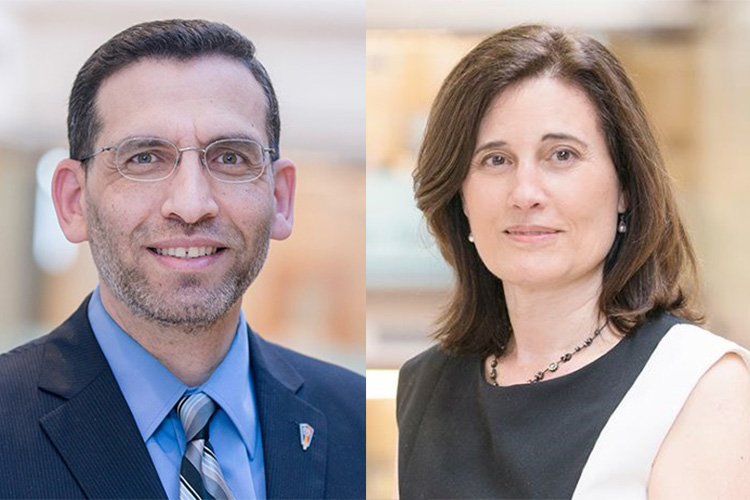
Amir Fam, Ph.D., P.Eng.
Assistant Professor and Canada Research

Dr. Amir Fam holds a Tier II Canada Research Chair and was awarded a Queen's University Chancellor's Research Award. He received his M.Sc. (1996) and Ph.D. (2000) in Structural Engineering from the University of Manitoba. After spending two years as a Post-Doctoral Research Associate and Lecturer at North Carolina State University, he joined the Civil Engineering Department at Queen's in 2002. Dr. Fam is the author of more than 35 refereed technical publications in journals and conference proceedings. Dr. Fam has conducted large scale experimental modeling of two unique bridges, each considered to be the first of its kind: the Taylor Bridge (Manitoba), using girders fully prestressed and reinforced for shear by carbon-FRP, and the Route 40 Bridge (Virginia), using concrete-filled glass-FRP tubes for piers without the need for steel rebar.
Learn more about Amir Fam's research...
Richard Brachman, Ph.D., P.Eng.
Assistant Professor, Department of Civil Engineering

Dr. Brachman earned his PhD in Geotechnical and Geoenvironmental Engineering from the University of Western Ontario in 1999. Since joining Queen's in 2001, he has been very active in developing world class experimental facilities to permit physical testing of pipes and other buried structures that are the unseen portion of the infrastructure supporting our cities. These efforts include the recently completed Large-scale Geotechnical Testing Laboratory at Queen's West Campus, and current construction of a new Geosynthetics Durability Facility, both funded by the Canadian Foundation for Innovation and the Ontario Innovation Trust. He is the recipient of a Premier's Research Excellence Award from the Government of Ontario and a Teaching Award from his undergraduate students in Civil Engineering.
Learn more about Richard Brachman's research...
Professor Ian Moore and his GeoEngineering Laboratory
Executive Director GeoEngineering Centre at Queen's

Dr Moore is a Civil Engineer specializing in Geotechnical Engineering, Engineering Mechanics, Non-linear soil-structure interaction, and analysis and design of buried infrastructure, polymer structures, and shell structures. Dr Moore is a Civil Engineer specializing in Geotechnical Engineering, Engineering Mechanics, Non-linear soil-structure interaction, and analysis and design of buried infrastructure, polymer structures, and shell structures.
Learn more about Ian D. Moore's research...
Limit states for large span culverts
Ian D. Moore, BE, PhD Sydney, FCAE, FEIC, P.Eng.

Culvert across Kettle Creek, Elgin County, following rehabilitation to improve buckling strength in 1988.
Learn more about Ian D. Moore's research...
Dr. B.C. Anderson

The research program focuses on the use of natural and engineered biological systems for environmental control, with application to the problems of urban and semi-urban stormwater runoff, and the treatment and discharge of wastewater from small-scale unserviced areas.
Learn more about B.C. Anderson's research...
Ana Maria A.F. da Silva
Professor, Department of Civil Engineering

Dr. da Silva is a Civil Engineer specializing in Environmental Fluid Mechanics, Fluvial Hydraulics and River Engineering. Her research interests include mechanics of turbulent river flows, sediment transport and river morphodynamics.
Learn more about Ana Maria da Silva's research...
Yves Filion, PhD, PEng
Assistant Professor

I am part of the Environmental Engineering group in the Department of Civil Engineering at Queen’s University. As a member of this group, I spend a great deal of time thinking about how water systems in rural and urban areas can be designed, rehabilitated, and optimized to have the least impact on the natural environment and to pose the least risk to human health.
Learn more about Yves Filion's research...
Neil Hoult
Assistant Professor

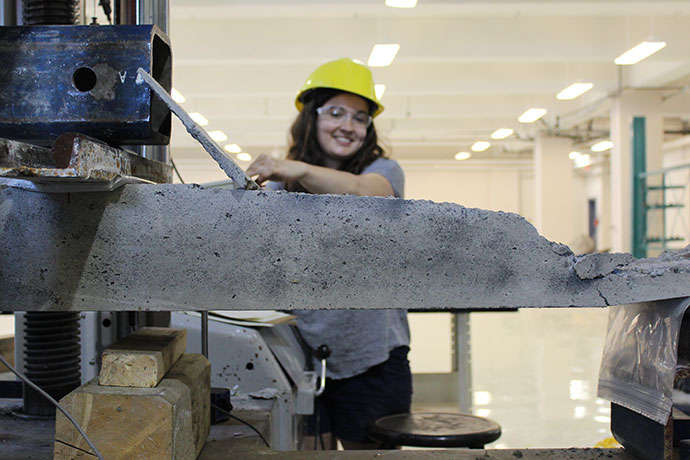
Professor Hoult’s research interests include the use of fibre reinforced polymers for retrofitting and reinforcing of concrete structures, testing and modeling of reinforced concrete and structural health monitoring. One of the challenges faced by society as a whole is how to use resources more efficiently and effectively.
Learn more about Neil Hoult's research...
Bernard H. Kueper
Professor, Ph.D, P.Eng.

Dr. Kueper's research is focused on the subsurface behaviour and clean-up of hazardous immiscible liquids such as chlorinated solvents, PCB oils and gasoline in both unconsolidated deposits such as sands and gravels as well as fractured clay and rock.
Learn more about Bernard H. Kueper's research...
Colin MacDougall

I am part of the Structures Group of the Department of Civil Engineering. We are an energetic group with a wide range of expertise in testing and modeling materials and structures, including: fatigue and fracture, fibre-reinforced polymers, fire, freeze-thaw effects, shell structures and pipelines, and dynamics.
Learn more about Colin MacDougall's research...
Kevin Mumford, Ph.D., P.Eng
Assistant Professor

Dr. Mumford’s current research focuses on understanding the behaviour of NAPLs in groundwater systems that contain trapped gas, which can be created by a number of natural and remediation-based mechanisms.
Learn more about Kevin Mumford's research...
R. Kerry Rowe, Ph.D., D.Eng., FRSC, FCAE, FEIC, P.Eng.
Professor and Canada Research Chair - Tier I

Educated at The University of Sydney, Australia, Dr. Rowe worked as a geotechnical engineer with the Australian Government Department of Construction prior to emigrating to Canada in 1978. He spent 22 years as a professor, including 8 years as Chair of the Department of Civil and Environmental Engineering, at The University of Western Ontario, London, Canada.
Learn more about Kerry Rowe's research...
Andrew Take, PhD (Cantab)
Associate Professor, Geotechnical / Geoenvironmental Engineering

Since 1998, Dr. Take's primary research interests have been in the major themes of seasonally-driven progressive failure of slopes, triggering of fast landslides, long-term degradation of dams, tensile-strength of clays, and the development of new technology for experimental research.
Learn more about Andrew Take's research...